



Predictive vs. Preventive Maintenance for Rotary Kilns | LuMing
 Aug 14, 2026|
 View:45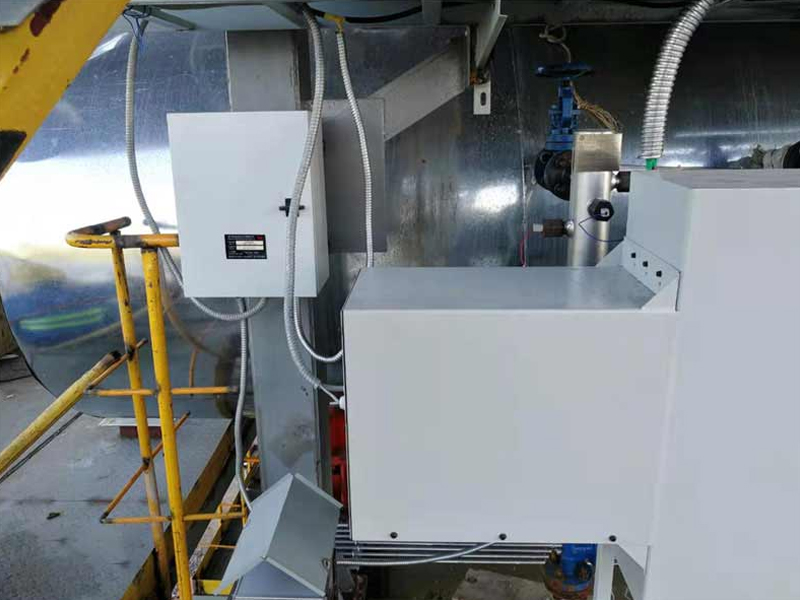
Rotary kiln operations in cement, glass, steel, and petrochemical plants require a clear maintenance strategy to ensure reliable output. Traditional preventive maintenance relies on fixed calendar schedules to inspect mechanical parts. However, predictive thermal imaging tracks real-time kiln condition variations continuously during operations.
While scheduled preventive routines build an essential baseline, adopting predictive maintenance yields a significantly higher ROI. Facilities reduce cost losses by capturing early thermal anomalies before refractory structural failures occur. According to industry benchmark data, real-time monitoring can reduce kiln downtime substantially.
Metric | Reported reduction | Strategy Comparison |
|---|---|---|
Unplanned downtime for rotary kilns | 40% | AI predictive condition monitoring vs calendar-based kiln maintenance |
Key Takeaways
Predictive thermal imaging monitors rotary kilns continuously during active operation.
Real-time sensor monitoring reduces unplanned kiln downtime by 40 percent.
Kiln shell scanners detect hot spots early to prevent costly shell failures.
Early warning alerts give maintenance teams 30 days to plan repairs.
Combining predictive tools with regular checks maximizes long-term equipment life.
Understanding Preventive Rotary Kiln Maintenance
Scheduled Inspections and Mechanical Audits
Plant engineers rely on scheduled intervals to execute routine rotary kiln maintenance across heavy industrial facilities. Operating crews conduct daily walkdowns across all pier locations to check gear lubrication, inspect drive trains, and observe support roller conditions. Technicians monitor roller bearing temperatures continuously, setting alert thresholds at 70°C and requiring direct corrective actions when temperatures exceed 85°C. These daily checks help operators identify developing mechanical abnormalities weeks before major stops occur.
Weekly physical audits focus specifically on tire migration, retainer block wear, and roller clearance parameters. Maintenance personnel measure tire creep to ensure axial movement stays within the standard range of 4 to 12 mm per revolution, immediately investigating any readings above 20 mm. Furthermore, comprehensive hot alignment surveys conducted every 12 to 18 months evaluate shell deflection, foundation settlement, pier elevation changes, and support load distribution across all piers.
Limitations of Time-Based Servicing Routines
Time-based preventive routines follow rigid calendar schedules rather than actual operational stress or real-time component wear. Consequently, periodic manual audits cannot detect rapid thermal shocks, sudden drive strain, or fast refractory lining degradation occurring between planned service windows. Internal furnace refractories sustain continuous thermal wear, but traditional physical audits evaluate brick integrity only during costly plant shutdown stops.
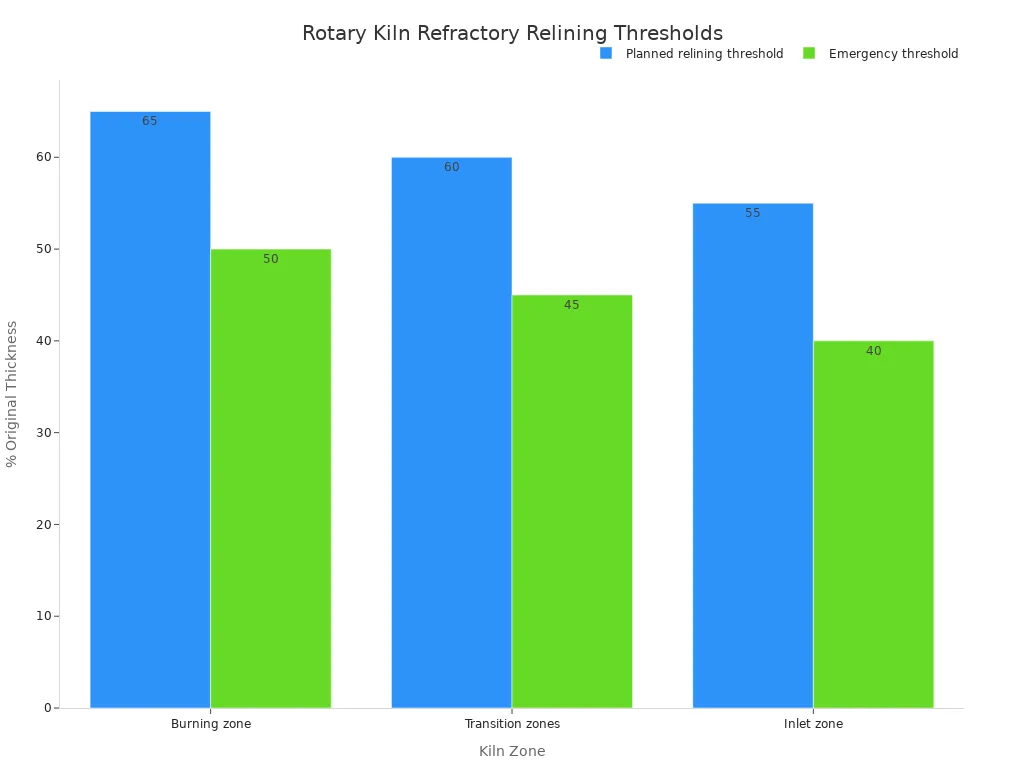
Planned relining guidelines recommend replacing burning zone refractory materials when thickness drops to 65% of the original measurement, while transition zones trigger planned replacement at 60%. However, unmonitored hot spots can accelerate brick wear down to emergency thresholds of 50% in the burning zone or 45% in transition zones. Standard preventive practices fail to deliver cement kiln thermal monitoring. Relying exclusively on a preventive maintenance strategy leaves the metal shell vulnerable to severe structural damage between maintenance cycles.
Leveraging Predictive Maintenance and Infrared IoT
Real-Time Thermal Imaging and Sensor Networks
Continuous sensor tracking transforms standard facility care from a reactive routine into a proactive system. Rotary kiln operations generate continuous mechanical and thermal stresses across all drive components. Modern sensor networks gather key operating parameters during active production runs.
Continuous sensor data set | Predictive-maintenance use |
|---|---|
Shell temperature | Enables real-time tracking of kiln thermal condition |
Rotational speed | Provides real-time operational parameter tracking |
Bearing conditions / temperatures | Supports continuous condition monitoring |
Shell deformation | Facilitates precisely timed interventions |
Drive performance | Helps schedule predictive maintenance |
Vibration analyzer data | Allows condition monitoring without stopping the kiln |
Ultrasonic thickness gauge data | Adds structural thickness data to continuous monitoring |
IoT sensor data streams | Feed machine-learning models that detect subtle pre-failure changes |
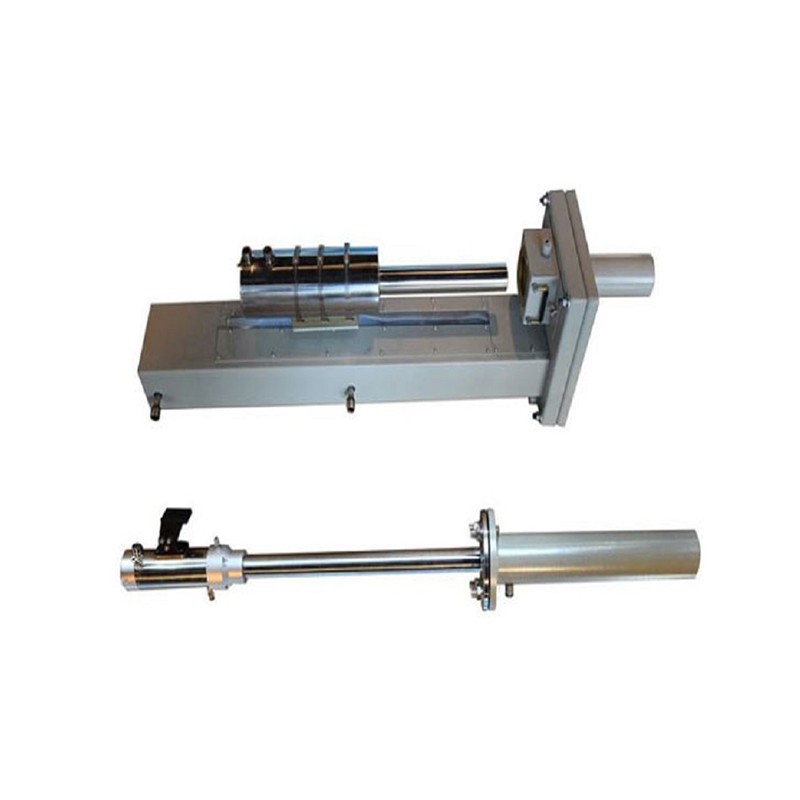
Collecting continuous sensor data creates complete visibility across every operating zone. Triaxial accelerometers mounted on support rollers measure high-frequency vibration to detect bearing defects early. Meanwhile, infrared pyrometers measure outer shell heat variations continuous scan cycles. Industry leader LuMing Technology Group provides high-temperature industrial special monitoring equipment and video infrared thermal imagers. Their flagship LM-NZ500 system handles furnace walls approximately 500mm thick, delivering precise high-temperature flame imaging.
Advanced AI analytics process these complex data streams to establish a steady operational baseline. Built-in algorithms monitor live data patterns and generate automated predictive alerts before mechanical damage spreads. Incorporating modern AI-powered predictive maintenance helps plant managers boost long-term equipment availability across demanding industrial environments.
Real-Time Thermal Monitoring to Reduce Kiln Downtime
Continuous infrared scanning monitors the entire shell surface continuously on every single kiln rotation. Non-contact thermal cameras track real-time thermal radiation to identify hidden refractory brick spalling. Advanced software analytics spot localized temperature shifts long before severe metal shell damage occurs.
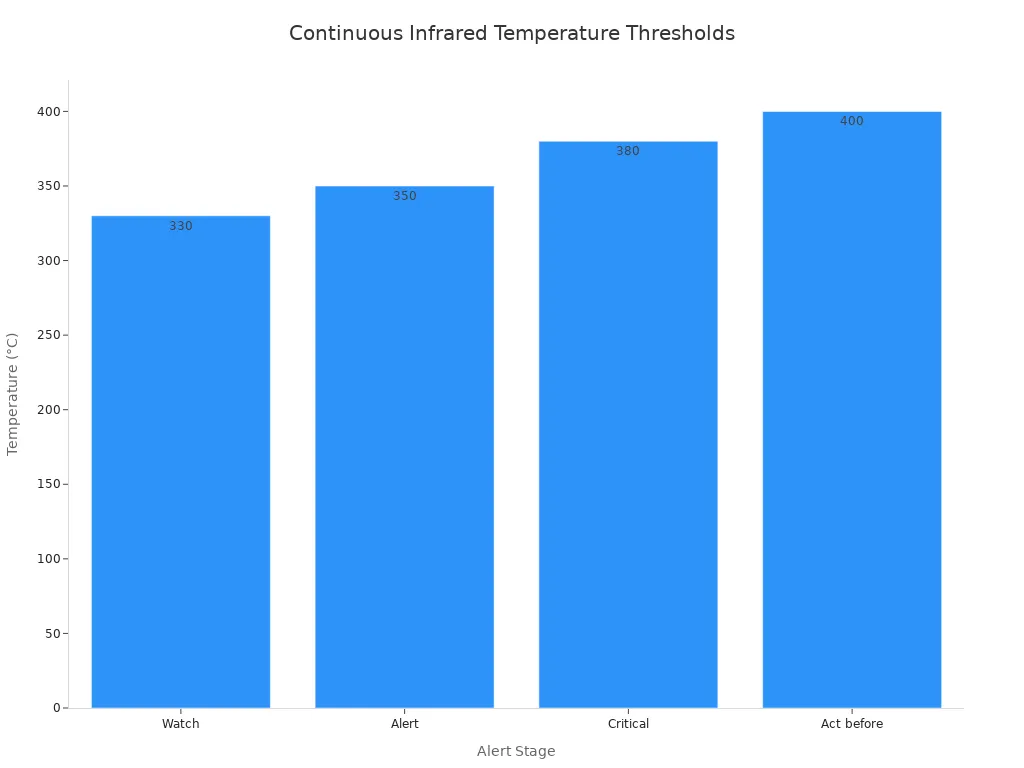
Integrated thermal networks flag developing hot spots when shell surface temperatures reach a 330°C watch threshold, trigger an official alert at 350°C, reach critical status at 380°C, and require direct operational action before reaching 400°C.
Early detection provides engineering teams with over 30 days of lead time to schedule minor relining tasks. Plant operators adjust burner flames or modify raw material feeds to protect vulnerable refractory areas. This early condition tracking provides accurate failure prediction, allowing targeted maintenance during scheduled stops. Consequently, cement plant case studies demonstrate that real-time thermal monitoring can reduce kiln downtime by 40% to 60%.
Equipment Availability (%) = (Total Operating Time - Unplanned Downtime) / Total Operating Time × 100
Eliminating unexpected thermal stops protects outer steel structures from permanent heat warping. Preventing severe structural shell distortion helps reduce kiln downtime during annual turnarounds. Furthermore, avoiding emergency stops maintains process stability and optimizes overall plant availability. Switching to predictive maintenance transforms raw sensor monitoring into actionable maintenance workflows that successfully reduce kiln downtime.
Direct Comparison: Cost, Downtime, and Risk
Upfront Capital Costs vs. Operational Savings
Traditional preventive maintenance strategies require minimal initial investment in modern hardware but rely heavily on manual labor and scheduled component replacements, which accumulate rapidly over years of continuous operation. Scheduled manual audits frequently miss real-time thermal anomalies occurring between service windows, leading to recurring machinery overhaul costs.
Predictive technology requires an initial capital expense for advanced sensor networks and infrared imagers. However, the ROI is rapid. Many plants seeking a reliable Valmet camera alternative or legacy system upgrade find that preventing a single unplanned downtime event—which can cost upwards of $100,000 per day in lost production and fuel waste—pays for the entire monitoring framework in weeks. Continuous asset protection delivers sustained financial value, generating a superior cumulative ROI compared to traditional calendar routines.
Mitigating Catastrophic Refractory and Shell Failures
Mechanical and thermal failure inside an operating kiln follows a predictable structural chain:
Uneven tire and roller contact alters tire migration dynamics.
Increased tire migration creates severe shell ovality across critical burning zones.
Continuous shell ovality induces severe refractory cracking and structural brick spalling.
Refractory brick loss causes direct shell exposure, rapid metal fatigue, and drive-component wear.
Integrated predictive sensors collect continuous data from proximity displacement gauges, accelerometers, axial sensors, and infrared scanners. This live data stream isolates precise mechanical root causes, including roller misalignment, bearing wear, pad wear, and foundation settlement. Infrared shell thermal monitoring provides 7–21 days of advance warning before catastrophic structural breakdown occurs. Continuous ovality trending detects sub-millimeter changes per rotation during full production speed.
Targeted interventions allow maintenance teams to fix alignment deviations during scheduled stops. To address these mechanical root causes comprehensively, kiln shell ovality surveys and laser inspections are critical. Early mechanical corrections prevent continuous ovality from cracking the outer steel shell. This combined strategy helps reduce kiln downtime, protects structural components, and optimizes long-term operational cost.
Choosing the Best Maintenance Strategy for Rotary Kilns
Transitioning to Condition-Based Workflows
Plant managers must select an effective maintenance strategy to optimize capital spending and maintain high plant availability. Transitioning from calendar routines to condition-based maintenance requires a structured approach across critical plant assets.
Classify the kiln drive and shell as Tier 1 assets during Phase 1 deployment.
Map specific failure modes and assign dedicated sensor data collection points.
Establish CMMS baseline rules to process real-time condition indicators.
Train plant technicians on automated predictive alerts and diagnostic procedures.
Decision rule for rotary kilns: Classify the kiln as a Tier 1 critical asset. Use predictive maintenance (shell temperature scanning, tire migration, thrust roller vibration) rather than fixed-interval preventive maintenance. A 1°C hotspot trend caught 9 days early prevents a $2M brick failure and 4 days of lost production. Downtime cost exceeds $100K/day, and PdM ROI is 6–9 months.
Connecting sensor data directly to maintenance work orders prevents missed alerts. Operating teams build confidence as condition-based monitoring eliminates unnecessary manual inspections.
Building a Hybrid Framework with LuMing Technology
Combining scheduled preventive routines with continuous predictive analytics creates a robust operational framework. Facility operators deploy advanced hardware from LuMing Technology Group alongside standard physical checks. High-temperature optical equipment feeds continuous operational data into smart factory architectures without requiring total replacement of legacy control systems.
Integration component | Role in plant-wide asset management |
|---|---|
IIoT sensors | Measure vibration and temperature across 40–80 sensing points independent of legacy PLCs. |
OPC-UA broker | Extracts historian data above existing DCS platforms to feed cloud analytics platforms. |
CMMS middleware | Triggers automated work orders when bearing vibration exceeds 12 mm/s RMS. |
Integrating AI predictive maintenance transforms continuous data into early failure detection. Real-time temperature analytics detect refractory wear early, allowing maintenance teams to address hot spots before structural shell failure occurs. Combining periodic mechanical surveys with continuous predictive monitoring extends overall equipment lifespan, lowers annual maintenance cost, and maximizes long-term equipment availability to deliver a strong system ROI.
Preventive routines establish an essential operational baseline for heavy industrial facilities. However, predictive thermal imaging offers superior protection against unexpected mechanical failures. Real-time infrared monitoring systems protect crucial rotary kiln components continuously. Continuous thermal tracking shields refractory linings, protects drive mechanisms, and preserves structural shell integrity.
Plant managers must audit their existing monitoring stack to eliminate operational risks. Integrating high-temperature hardware from LuMing helps optimize facility spending and lower overall maintenance cost. Advanced thermal tracking catches localized hot spots early to reduce kiln downtime by 30% to 40%. This proactive strategy eliminates unplanned downtime, extends total equipment lifespan, and delivers an exceptional long-term financial ROI.
Ready to Eliminate Unplanned Kiln Downtime?
Stop relying on guesswork. Upgrade your plant with LuMing's advanced Kiln Shell Scanners and High-Temperature Vision Systems.
Request a Free Consultation & QuoteFAQ
How does predictive maintenance reduce rotary kiln downtime?
Predictive maintenance uses continuous temperature data to spot thermal anomalies early. Advanced analytics identify refractory brick wear before catastrophic failures occur. This early warning helps plant operators schedule minor repairs during planned stops, reducing unplanned downtime by 30% to 40%.
What is the purpose of real-time thermal scanning on a kiln shell?
Real-time thermal scanning tracks outer shell heat variations during active production. Infrared systems flag hot spots at a 330°C watch threshold before temperatures reach critical levels. Continuous tracking protects shell integrity and prevents severe structural damage.
Can predictive technology integrate with existing plant systems?
Modern sensor networks integrate directly into Industry 4.0 smart factory architectures. Systems transmit real-time condition data without requiring a total replacement of legacy control hardware. Automated work orders trigger as soon as operating parameters cross pre-set safety limits.
What furnace wall thickness does the LuMing LM-NZ500 monitoring system support?
LuMing Technology Group engineered the LM-NZ500 High-Temperature Flame Monitoring Industrial TV specifically for furnace walls approximately 500mm thick. The system delivers exceptional temperature measurement precision and wide observation angles for continuous high-heat asset protection.
Recommended Products
Recent News
1.Cement Kiln Monitoring Guide: Shell Scanning & Burner Optimization
2026-05-122.Rotary Kiln Monitoring System: Prevent Costly Downtime in Cement, Steel & Lime Plants
2026-04-303.swir-vs-lwir-thermal-sensors-kiln-camera-selection-guide
2026-05-114.High Temperature Cameras for Furnaces and Kilns
2025-12-24